

Issue 6 of the Europlanet Magazine is out now! In this issue: In Focus A round up of news from Europlanet and the planetary community, including: • New Board Members of the Europlanet […]
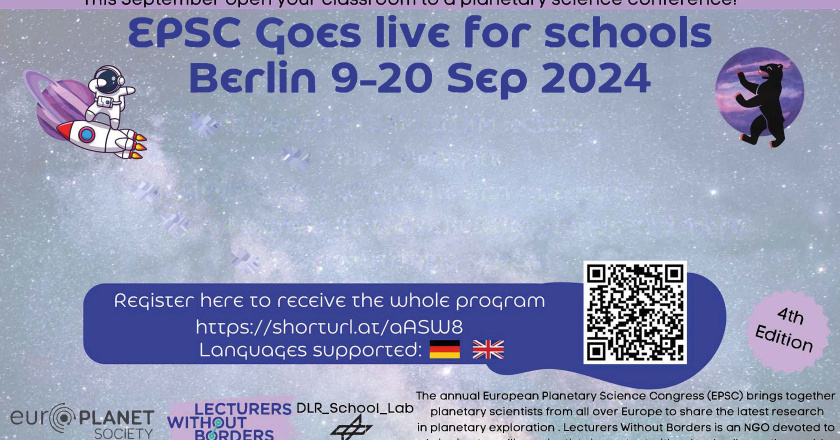
EPSC Goes Live for Schools 2024 / 4th edition During the Europlanet Science Congress (EPSC) from 7-13 September 2024, Berlin will become a travelling hotspot for planetary scientists. EPSC Goes […]
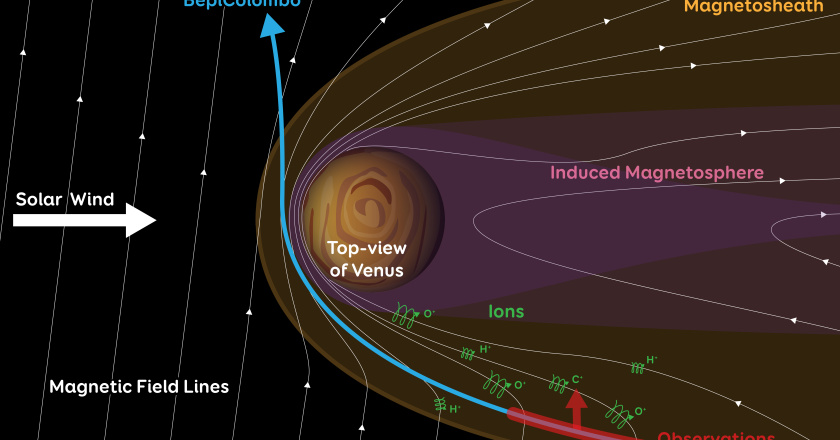
BepiColombo Spies Escaping Oxygen and Carbon in Unexplored Region of Venus’s Magnetosphere A fleeting visit of the ESA/JAXA BepiColombo mission to Venus has revealed surprising insights into how gases are […]
Apply to host EPSC in 2026 and 2027! Deadline for applications extended to 15 May 2024 We are delighted to announce the call to host the Europlanet Science Congress (EPSC) […]
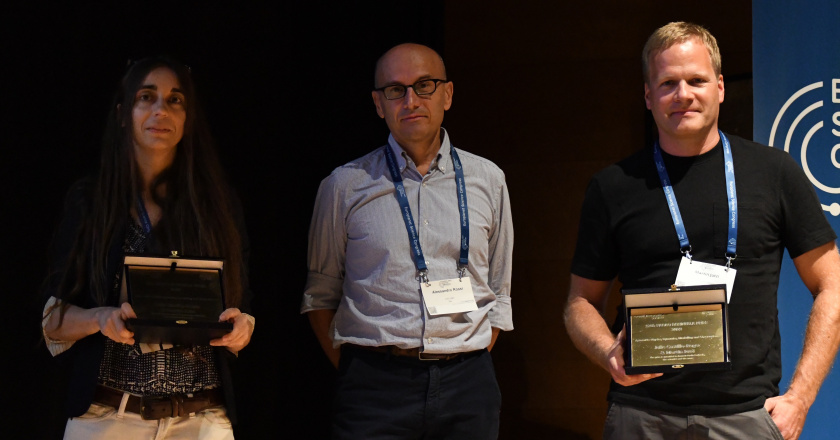
Winners Announced of the 2024 Europlanet Early Career Prize for Best Iberian Thesis in Planetary Sciences The Europlanet Iberian Hub is proud to announce the winners of the first planetary […]
14th “Paolo Farinella’’ Prize, 2024 To honor the memory and the outstanding figure of Paolo Farinella (1953-2000), an extraordinary scientist and person, a prize has been established in recognition of […]
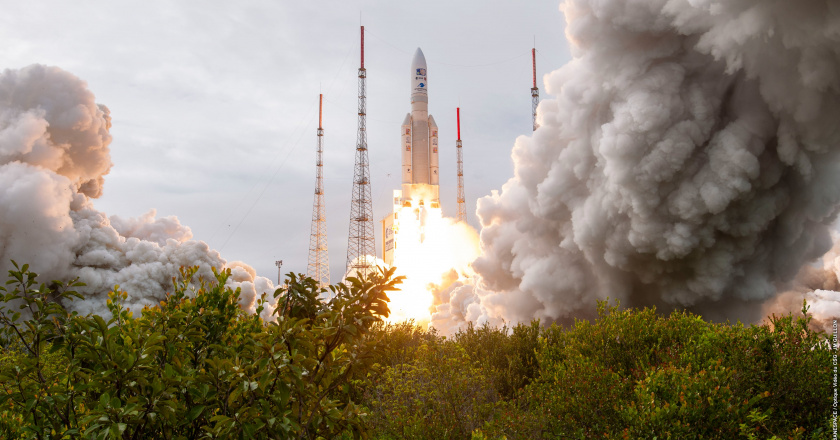
Juice Science Webinar Series: Juice One Year After Launch – News and Outlook Webinar: 12 April 2024, 14:00 CEST On the 14th April 2023, JUICE was launched from Kourou by […]
EPSC2024 – Call for Abstracts We invite the world-wide community of planetary scientists to submit an abstract for presentation of their recent work at the EPSC2024 meeting, which will take […]
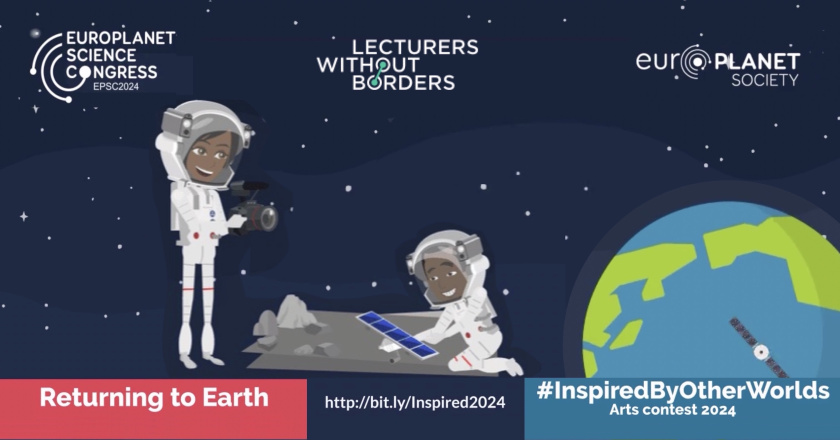
Get creative with Europlanet’s #InspiredByOtherWorlds arts contest 2024 The Europlanet Science Congress (EPSC) 2024 is inviting schools and space enthusiasts of all ages to get creative and share their artworks and performances inspired by other worlds […]
Inaugural Workshop on Nuclear Astrochemistry An inaugural workshop on Nuclear Astrochemistry has taken place this week at the European Centre for Theoretical Studies in Nuclear Physics and Related Areas (ECT*) […]
EXPLORE – Career Profiles Europlanet’s sister-project, EXPLORE, has been funded by the European Commission to develop Machine Learning and advanced visualisation tools to support the astronomy and planetary communities. One […]
Europlanet Society Discord Get-Togethers What Are They? Europlanet Society’s Discord get-togethers are informal, weekly sessions aimed at fostering community, facilitating conversation, and promoting engagement among our members. Unlike formal meetings, […]
UN/Austria Symposium 2024 🌍 Space Applications for Climate Action: Addressing Challenges and Opportunities Join us for the UN/Austria Symposium 2024, where we’ll explore the role of space applications in climate […]
According to Niklas Nienass’ recent post, the postponement of the European Space Act within the current legislative period has raised concerns about the trajectory of European space policy. Nienass had […]